


.svg)


How to Verify a Tenant's Rental History: A Step-by-Step Guide for Landlords

Rental history verification is one of the most reliable tools landlords and property managers have for making informed leasing decisions.
Before a lease is signed, contacting previous landlords to confirm how an applicant actually behaved as a tenant takes only a few days and can prevent months of financial and operational fallout. A single unverified lease-up can translate into unpaid rent, costly property damage, or an eviction process that stretches well beyond the original bad debt.
This guide covers what rental history verification is, why it belongs in every screening workflow, how to run it step by step, what questions to ask, and how to handle applicants who have no prior rental history to verify.
What Is Rental History Verification?
The Basics of the Process
Rental history verification is the process of confirming how an applicant actually behaved as a tenant by contacting their previous landlords or property managers directly. It is not a single document or automated report. It is an active outreach process that supplements the rental application with firsthand information.
The goal is to confirm whether the facts an applicant supplied are accurate: the tenancy dates, the rent amount, the reason for leaving, and the overall conduct during the lease term. Verification surfaces the details no credit report captures.
How It Differs from Credit and Background Checks
Credit checks assess broad financial behavior. Background checks surface legal history. Rental history verification evaluates housing-specific behavior: lease compliance, payment patterns, and how the tenant treated the property.
Standard credit reports do not include rental payment history unless a specialized tenant screening report is ordered. All three tools serve different purposes and work best used together as part of a complete screening process.
Why Rental History Verification Matters
Past Behavior Predicts Future Tenancy
Confirmed rental history gives landlords evidence-based grounds for leasing decisions rather than relying on an applicant's self-reported account. Patterns of late payment, lease violations, or complaints from neighbors are far more visible through direct landlord contact than through any automated report.
An applicant can describe their rental history any way they choose on an application. Verification replaces that narrative with documented facts from the people who lived it alongside them.
Protecting Your Property and Net Operating Income
Skipping verification increases exposure to tenants who damage property, miss payments, or generate turnover costs that compound quickly. Vacancy loss, make-ready expenses, and legal fees from an eviction can all trace back to a lease-up decision made without confirming what a prior landlord could have confirmed in a single phone call.
For operators managing multiple units, the NOI impact of one high-risk tenant placement is not isolated. It ripples into bad debt expense, occupancy forecasting, and the overall cost of managing that asset.
Maintaining Fair and Legally Defensible Screening
Applying consistent verification criteria to every applicant supports compliance with fair housing laws and reduces discrimination liability. Selective verification, where some applicants are checked and others are not, creates legal exposure that a standardized process eliminates.
If a denial is based in whole or in part on information from a consumer report, the Fair Credit Reporting Act requires providing the applicant with an adverse action notice. This notice must identify the reporting agency used and inform the applicant of their right to dispute the information. Document this step every time it applies.
How to Run a Rental History Verification Check
Step 1: Collect the Application and Written Consent
Secure a complete rental application with accurate contact details for all prior landlords. Before conducting any verification that involves a consumer reporting agency, the FCRA requires written authorization from the applicant. Collect this consent at the application stage, before outreach begins.
Step 2: Gather Supporting Documents
Request previous lease agreements, rent payment records, or move-in and move-out condition statements from the applicant. These documents establish a baseline you can cross-reference against what prior landlords report when you reach them.
Step 3: Contact Previous Landlords Directly
Reach out by phone or send a standardized verification form. Before calling, cross-reference every landlord contact the applicant supplied against county property ownership records. This is the primary defense against fabricated references, a risk covered in more detail in the pitfalls section below.
Ask specific questions that only a real landlord would know: exact lease end date, security deposit amount returned, condition of the unit at move-out. General questions are easier to answer convincingly by someone posing as a former landlord.
Step 4: Free and Online Rental History Verification Options
Landlords can run rental history verification through several channels, including at no cost. Some tenant screening platforms include rental history as part of a bundled report. Others offer standalone rental history checks for a per-report fee. Pricing and depth of coverage vary significantly across providers.
Online verification services automate landlord outreach and pull from public records, collections databases, and eviction filings. They reduce turnaround time compared to manual phone outreach. However, they do not fully replace direct landlord contact. Lease violation details, property condition, and the landlord's overall impression of the applicant rarely appear in automated reports.
For decisions involving applicants with limited rental history or any application where a prior tenancy is a deciding factor, combine automated tools with at least one direct landlord conversation.
Step 5: Evaluate and Document the Results
Review all findings against your pre-established screening criteria. Apply those criteria consistently across every application reviewed in the same cycle.
Maintain written records of all communications, documents received, and the final decision rationale. This documentation supports fair housing compliance if a decision is ever challenged and creates an auditable screening record for your property management files.
What Is a Rental Verification Letter?
A rental verification letter is a written confirmation from a previous landlord or property manager documenting the key facts of a tenancy: dates of occupancy, monthly rent, payment history, and whether the landlord would rent to the applicant again. It provides a paper trail that a phone call alone does not.
Request a verification letter on company letterhead when direct phone contact is not possible, when the prior tenancy was at a professionally managed property with documented records, or when the applicant's rental history is a primary factor in the leasing decision. A signed letter also becomes part of the application file, supporting your compliance documentation.
Letters are not a replacement for a live conversation when one is available. They are most useful as a supplement or as the primary record when a prior landlord cannot be reached by phone.
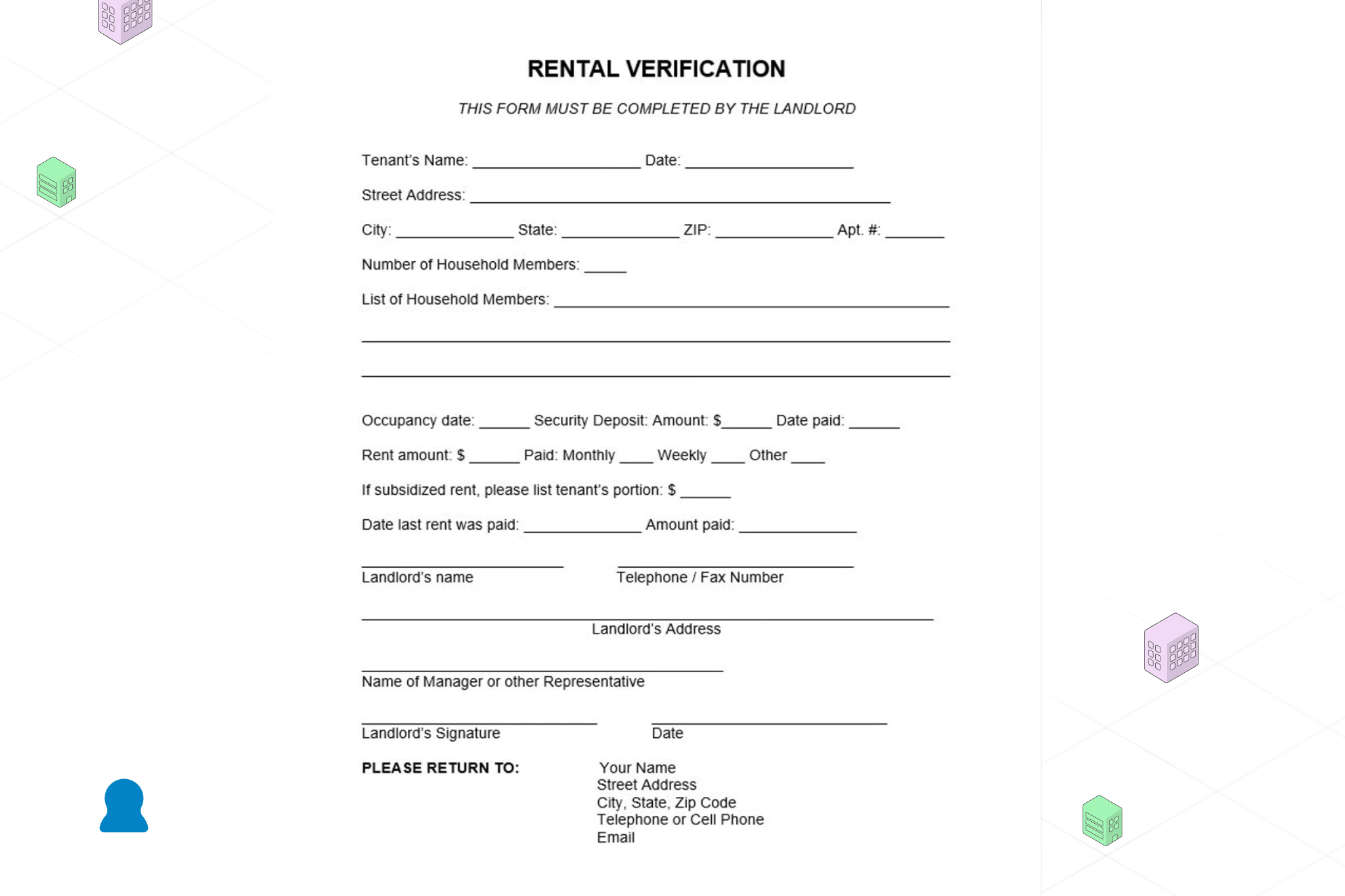
Questions to Ask on a Rental Verification Form
A rental verification form is a standardized document you send to a prior landlord to collect written confirmation of an applicant's tenancy. Rather than relying on an unstructured phone conversation, the form gives you a consistent record across every application: the same questions asked of every prior landlord, with responses you can file, compare, and reference if a decision is later challenged.
Using a form also makes it easier for prior landlords to respond efficiently. A structured document with clear fields takes less effort to complete than an open-ended call, which means faster turnaround and more complete answers. It also signals to the prior landlord that the request is professional and documented, which can improve response rates from managed properties.
The questions below represent the core categories every rental verification form should cover. Adjust the detail level based on how central the prior tenancy is to the leasing decision.
Tenancy Dates and Rent Amount
Confirm the exact start and end dates of the tenancy and the monthly rent amount the applicant paid. Discrepancies between what the applicant reported and what the prior landlord confirms are an immediate flag worth investigating before the application moves forward.
Payment History
Ask directly: did the tenant pay on time? Were there any late payments, and if so, how many and how far past due? One late payment in two years tells a different story than a pattern of payment delays every quarter.
Property Condition and Lease Compliance
Ask whether the tenant caused damage beyond normal wear and tear and whether there were any lease violations during the tenancy: unauthorized occupants, undisclosed pets, or noise complaints from neighbors. These behavioral patterns are the ones most likely to repeat.
The Closing Question
Always close with: "Would you rent to this applicant again?" This single question surfaces the prior landlord's overall assessment in a way that detailed factual questions may not capture. A pause before answering is itself informative.
Common Pitfalls in Rental History Verification
Relying on Verbal Confirmation Instead of Written Documentation
A phone call is a starting point, not a record. Always follow up with a written verification form or request a letter on company letterhead. If a tenancy decision is later disputed, verbal confirmation you cannot reproduce carries no weight in a compliance review.
Overlooking Document and Reference Fraud
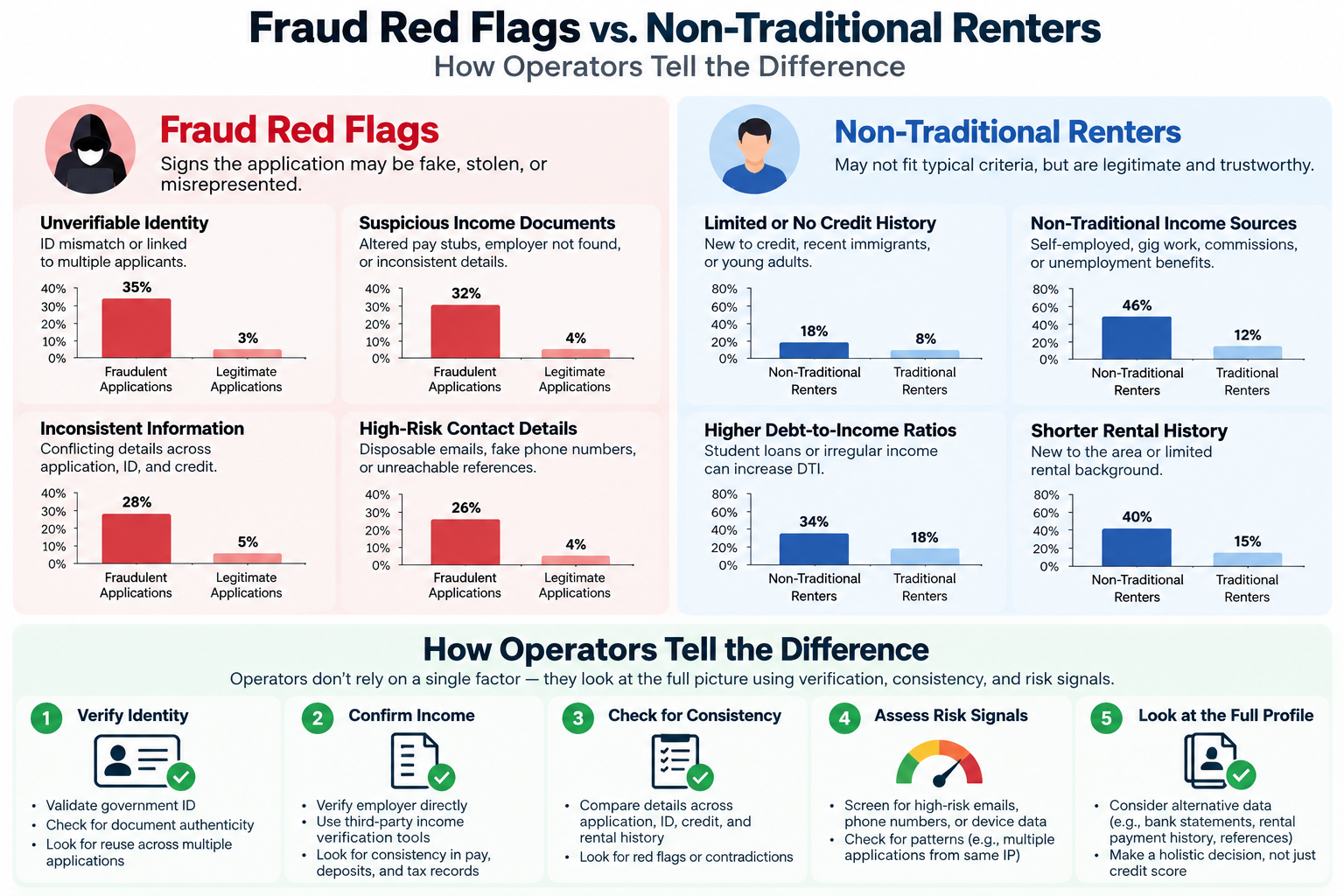
Fabricated landlord references are a real and growing risk in the application process. An applicant may list a friend or family member as a prior landlord, supply a fake phone number, or present forged lease agreements alongside the application.
Cross-reference every landlord contact against county property ownership records before calling. Ask questions that require specific knowledge only a real landlord would have: exact move-out date, security deposit amount, unit condition at turnover. Document fraud also extends beyond references to pay stubs and bank statements submitted as part of the income verification process.
Applying Inconsistent Screening Standards
Verify every applicant using the same process and the same criteria. Selective verification, checking some applicants and not others, creates fair housing exposure regardless of intent. Standardized criteria applied consistently is the baseline for a legally defensible screening process.
If a denial is based on information from a consumer report, issue the required adverse action notice. This notice identifies the reporting agency and informs the applicant of their right to dispute the findings. Skipping this step creates regulatory risk under the FCRA.
Skipping Verification Entirely
Taking an applicant's self-reported rental history at face value is a material risk. Verification is the only mechanism that confirms what an applicant reports about their own past tenancy is accurate. No other step in the screening process substitutes for it.
How to Handle Applicants with No Rental History
[visual placeholder: image of property manager reviewing documents with young renters]
Income and Employment Verification
For first-time renters, recent graduates, or applicants relocating from owner-occupied housing, there is no prior landlord to contact. Shift the focus to financial stability: verify employment status through a direct employer call or verification letter, review recent pay stubs, and request bank statements to assess savings relative to rent obligation.
Co-Signers and Third-Party Lease Partners
A co-signer or third-party lease partner takes on financial liability if the tenant fails to meet their lease obligations. This structure allows operators to qualify applicants who present strong behavioral indicators but fall short of the income or credit threshold the property requires.
For multifamily operators, a third-party lease partner like Cosign adds financial backing without requiring the operator to lower screening standards. When verification surfaces a promising applicant who narrowly misses qualification on financial grounds, a third-party lease partner closes that gap while keeping the criteria intact.
Personal and Professional References
Character references from employers, academic advisors, or professional mentors can supplement the picture when rental history is absent. These references speak to reliability and conduct rather than tenancy specifics, so they work best alongside income verification rather than as a standalone substitute.
Frequently Asked Questions
How long does rental history verification take?
Typically 48 to 72 hours, depending on how quickly prior landlords respond to outreach. Verification through an online screening service may return results faster for the automated components, though direct landlord contact often takes longer when calls require follow-up.
Can a former landlord refuse to respond?
Yes. Prior landlords are not legally required to respond to verification requests. Some decline due to company policy, liability concerns, or simple non-response. If a prior landlord cannot be reached after multiple attempts, document the outreach and weigh the absence of a reference alongside the rest of the application. Do not treat silence as a positive signal.
Does rental history appear on a standard credit report?
Not typically. Standard credit reports focus on credit accounts, balances, and payment history with lenders. Rental payment history does not appear unless the prior landlord reported it through a rent reporting service or the tenancy resulted in a collections account. Specialized tenant screening reports are designed to surface rental history alongside credit data.
What is a rental verification letter?
A rental verification letter is a written record from a prior landlord confirming the key facts of a tenancy. See the dedicated section above for when to request one and what it should include.
Conclusion: Verify First, Then Qualify Confidently
Rental history verification is the step that separates what an applicant claims from what their track record confirms. Running it consistently, documenting every result, and using the right combination of direct outreach and screening tools protects the property, preserves NOI, and keeps the screening process legally defensible.
Even a thorough verification process will surface applicants who are behaviorally strong but narrowly miss a financial threshold. Lowering standards to fill a unit creates risk. A better option is a third-party lease partner that closes the qualification gap without compromising the criteria you use to screen every applicant.
Cosign acts as a third-party lease partner for applicants who pass your screening on conduct but fall short on income or credit. Your standards stay intact. The unit gets filled.
Turn more qualified applicants into signed leases without compromising your screening criteria. Schedule a conversation with Cosign to see how third-party rent guarantees help operators increase approvals while protecting NOI. Book a demo here
.avif)
.avif)
.jpeg)

.png)



Let’s boost your occupancy rates


