


Where Apartment Turns Lose Time: A Timeline From Move-Out to First Showing
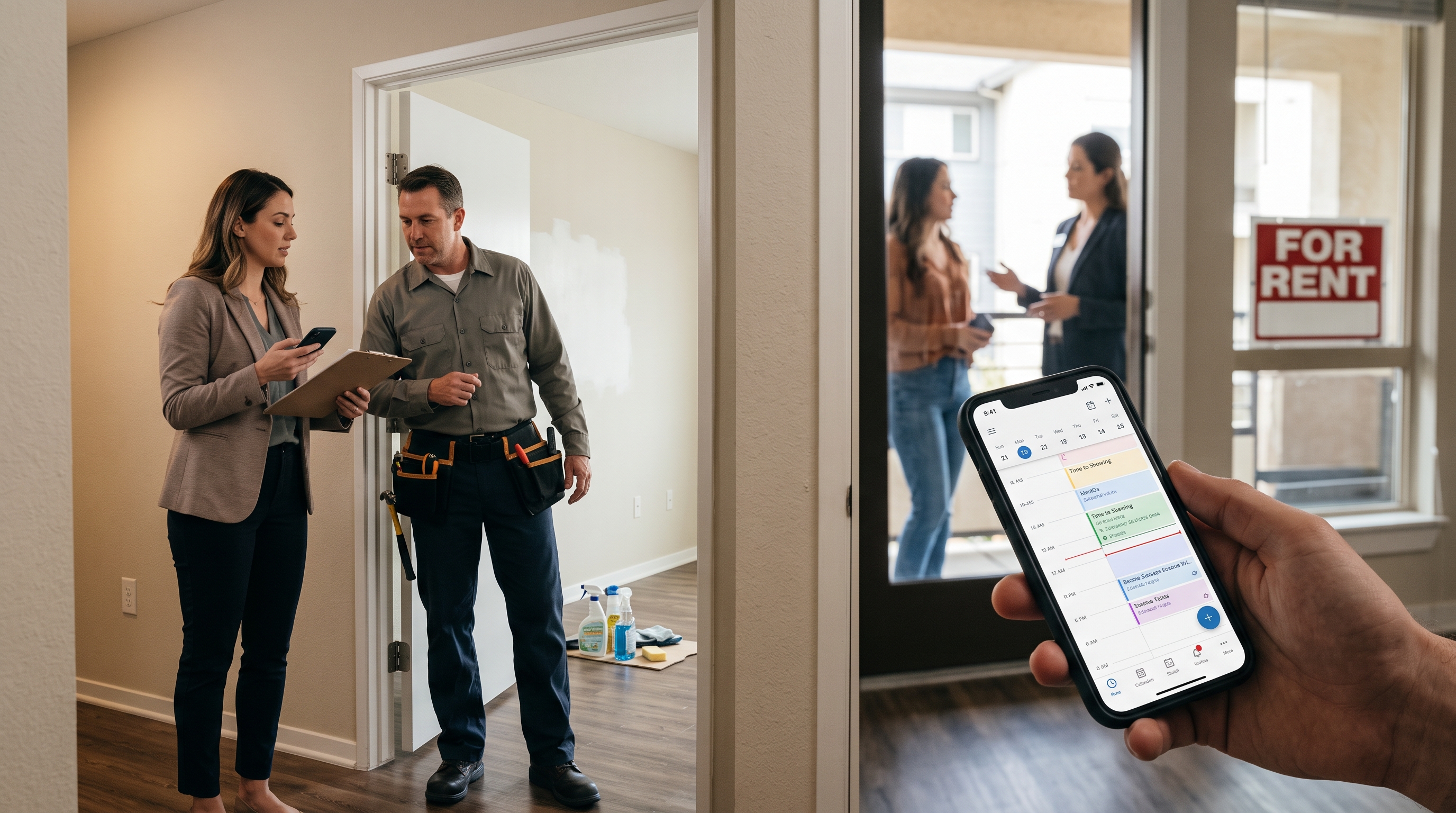
A vacant unit has several clocks
A unit does not move directly from occupied to available. The team must complete a sequence: confirm the move-out, inspect the home, scope the work, schedule vendors, finish the turn, verify quality, and make the listing available. Each handoff can add time, even when every individual task seems routine.
Beyond how long a unit was vacant, the useful questions are where the team waited, what it was waiting for, and whether that wait could have been prevented. A clear turn process helps operators answer those questions without assuming every delay belongs to maintenance or leasing.
Map the work before the move-out
Start with the information already available. Review upcoming lease expirations and notices each week, confirm the expected move-out date, and check whether the property can schedule a pre-move-out inspection under its policies and applicable law. The goal is to identify likely repairs early without entering a home or making assumptions before the resident leaves.
Use a standard scope for common conditions such as paint, cleaning, flooring, appliances, and repairs. A consistent checklist makes it easier to estimate labor and materials, prepare vendor requests, and spot work that needs a specialist. Keep the checklist flexible enough to reflect the actual condition of each place.
Give every handoff an owner
A turn can stall when one person believes another person has taken the next step. Assign an owner for each milestone: inspection, work order, vendor scheduling, quality check, and listing activation. The owner may not complete every task personally and should still know who is responsible and when to follow up.
Agree ahead of time on how urgent issues move up the chain, so that when a part is unavailable or a repair needs approval, the team records the blocker, the person who can resolve it, and the next check-in time. This keeps the team from mistaking a known delay for an invisible one.
Track dates that reveal the bottleneck
For each turn, record the move-out date, inspection date, work-order date, work-complete date, quality-check date, listing-live date, and first-showing date. These timestamps show whether most time is spent waiting for a scope, a vendor, approval, or a listing update. Review the patterns by property and work type. Averages can hide a small number of unusually long turns, so look at the typical timeline and the longest cases. Pair the dates with a short reason code, such as parts delay, additional damage, vendor availability, or approval wait, so the team has something specific to improve.
Coordinate leasing and operations
Leasing should receive reliable updates about the unit's expected availability. If the date changes, update the listing and communicate the revised timing promptly. Marketing a home before the team can show it may create avoidable frustration; waiting until every detail is perfect may delay qualified prospects from seeing it. Teams should agree on the point at which a unit can be listed and the point at which it can be shown.
A short weekly review of upcoming move-outs and active turns can help maintenance, vendors, and leasing plan their work together. The review should focus on exceptions and decisions rather than reading every work order aloud.
A turn timeline earns its value when it helps the team pinpoint an avoidable wait and assign a change. Track the handoffs, address the recurring delay, and see whether the next unit reaches its first showing sooner.
Once the unit is ready, the next delay often sits in the application itself, and some properties offer institutional help such as Cosign so a qualified applicant who falls just outside one written criterion can keep moving toward a signed lease.








Let’s boost your occupancy rates


