


.svg)


The Ultimate 2026 Multifamily Lease-Up Strategy Guide
Apartment deliveries remain historically elevated relative to pre-pandemic averages across most primary U.S. markets, creating a hyper-competitive leasing environment where operators who win are those with a structured, data-driven plan built around their specific submarket.
A successful lease-up strategy for multifamily properties in 2026 requires more than strong marketing.
This guide covers every operational phase: the marketing framework that shapes all downstream decisions, pre-construction groundwork, pre-leasing preparation, go-to-market launch execution, velocity management, and retention through stabilization.
Multifamily Lease-Up Marketing Strategies for 2026
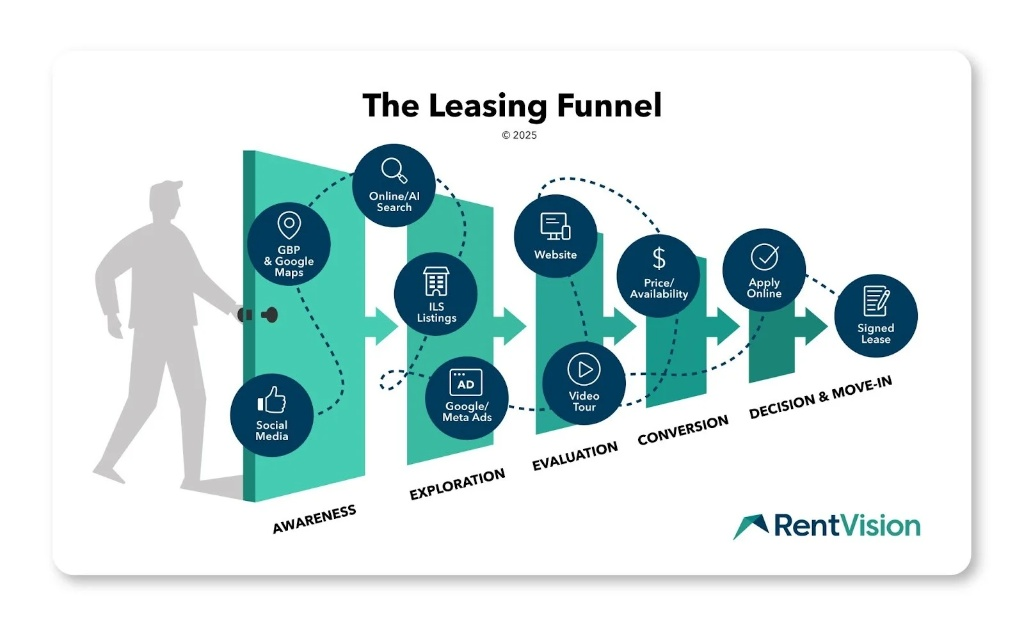
Every tactical decision in a lease-up, from when to launch paid ads to how to price a floorplan, should be shaped by a clear understanding of how renters make decisions. The Leasing Funnel framework, built from RentVision's analysis of over 95,000 leases, gives operators that foundation. It is the strategic lens through which the rest of this guide is written.
The Leasing Funnel Framework
Every prospective resident moves through five stages regardless of the channels they use: Awareness, Exploration, Evaluation, Conversion, and Decision. The purpose of the framework is not to prescribe which channels belong at which stage. It is to show that being present at the right moment with accurate information, rather than simply generating traffic volume, is what drives lease execution.
For lease-up operators, the practical implication is sequencing: build and maintain marketing presence at every stage of the funnel before doors open, not just at the bottom once the leasing team is ready to take calls. The phases that follow in this guide are designed to do exactly that.
The Three Channels That Drive Most Leases
RentVision's analysis of over 95,000 leases identified community websites as the top conversion channel, responsible for nearly 45,000 leases. Google Business Profiles ranked second with approximately 29,500 leases. Google Ads ranked third with roughly 4,700. Together, these three channels accounted for approximately 83% of all leases signed across 102 sources tracked.
ILS platforms including Apartments.com and Zillow contributed meaningfully and are worth maintaining. But the data argues against spreading budget thin across many channels at the expense of execution quality on the top three.
For lease-up operators with constrained budgets, this is a prioritization framework.
One additional note for 2026: AI tools including ChatGPT and Perplexity now surface apartment recommendations by pulling from GBP content, community website copy, and listing data. Pricing accuracy and amenity detail across every channel affects both traditional search visibility and AI-generated results.
Reputation Management as a Leasing Channel
Google Business Profile reviews are a direct leasing conversion factor, not just a brand asset. Renters in the Exploration stage check reviews before contacting a property. A low review count, unresponded negative feedback, or a declining rating signals risk at the exact moment a prospect is deciding whether to schedule a tour.
Effective reputation management during a lease-up covers active review generation from early satisfied residents, prompt and professional responses to all feedback, and monitoring across all major platforms. In 2026, GBP health also affects AI-generated apartment recommendations, making it a discovery channel as well as a trust signal.
AI Leasing Agents and 24/7 Lead Response
AI leasing agents are operational infrastructure for a 2026 lease-up, not optional automation. They handle FAQs, provide real-time pricing and availability, schedule tours, and escalate high-intent prospects to onsite staff around the clock.
The conversion case is straightforward: renters submitting inquiries to multiple properties simultaneously convert more often with the first property to respond accurately.
The integration requirement matters. AI leasing agents must connect to the property management system to deliver accurate, current pricing and availability. An AI agent serving outdated or incorrect information creates a trust gap that damages the leasing conversation rather than advancing it.
Virtual Tours and Visual Content
Virtual tours function as a qualification tool, not just a marketing asset. Renters who complete a virtual tour before inquiring arrive at the first conversation better informed and better qualified, which reduces wasted tour time for onsite staff and improves tour-to-application conversion.
The content portfolio for a 2026 lease-up should include 3D walkthroughs, floorplan-specific photography, and short-form video optimized for social platforms.
Transparency is non-negotiable. Visual content must accurately represent the current property. AI-staged or heavily altered imagery creates expectation gaps that produce unqualified tours: prospects who arrive, see something different from what they were shown, and leave without applying.
Pre-Construction Groundwork: The Six-to-Nine-Month Window
Most lease-up operators underinvest in the period before a single unit is ready to show. The six-to-nine-month window before opening is where the digital foundation gets built, or does not. Properties that start this work early open with search momentum, a growing interest list, and a leasing team that does not have to start from zero on day one.
Lock In Your Digital Presence Before Anyone Is Searching
Six to nine months out, the building may still be under construction, but the digital presence should not be.
The specific actions required at this stage:
- secure the domain
- claim and fully build out the Google Business Profile
- lock in brand identity,
- aunch a coming soon landing page that captures leads.
Early SEO work during this phase creates search ranking momentum that takes months to accumulate. Skipping it means starting that clock late.
Tracking infrastructure also needs to be set up at this stage, not retrofitted later. Without attribution in place before campaigns launch, operators cannot tie marketing spend to leasing outcomes, which makes every future budget decision a guess.
Build the Lead List Before Leasing Begins
An interest list built during the pre-construction phase is a velocity asset at opening. Low-budget awareness campaigns, early organic social presence, and a waitlist capture mechanism convert curious future residents into warm leads before the leasing team needs to work them.
The goal of this phase is not leases; it is qualified interest that converts faster once doors open.
Properties with 25% or more pre-leased before opening consistently achieve faster velocity once units become available. That pre-leasing momentum also generates early word-of-mouth, which reduces cost per lease as the lease-up progresses.
Pre-Leasing Preparation
Market Research and Competitive Positioning
Before setting strategy, operators need a clear picture of local rental trends, competitor pricing, renter demographics, and the property's unique selling points relative to the competitive set.
In high-delivery markets, local supply data and absorption rates must inform every strategic decision, from pricing to concession structure to target resident profile. National benchmarks are context; submarket data is the actual input.
Understanding the target resident profile matters beyond demographics. Knowing what amenities command rent premiums in a specific market, what lifestyle features drive conversion, and what the competitive set is offering shapes both marketing messaging and product positioning before the first ad goes live.
Pricing by Floorplan, Not by Building
Floorplan-level pricing is a conversion tool, not just a financial exercise.
Studios and one-bedrooms typically absorb faster than two- and three-bedroom units. Pricing must reflect independent demand signals by unit type, adjusted weekly based on leasing activity rather than set once at launch and held.
Operators who price by building rather than by floorplan routinely over-price slower-moving units and under-price faster ones, leaving revenue on the table in both directions.
Revenue management software is the operational mechanism for maintaining transparent, dynamic pricing across all units and all marketing channels simultaneously. Renters now expect accurate, clearly displayed pricing on community websites and ILS listings.
Missing or unclear rent information reduces clicks, increases cost per lead, and erodes trust at a stage where the property is still building its reputation.

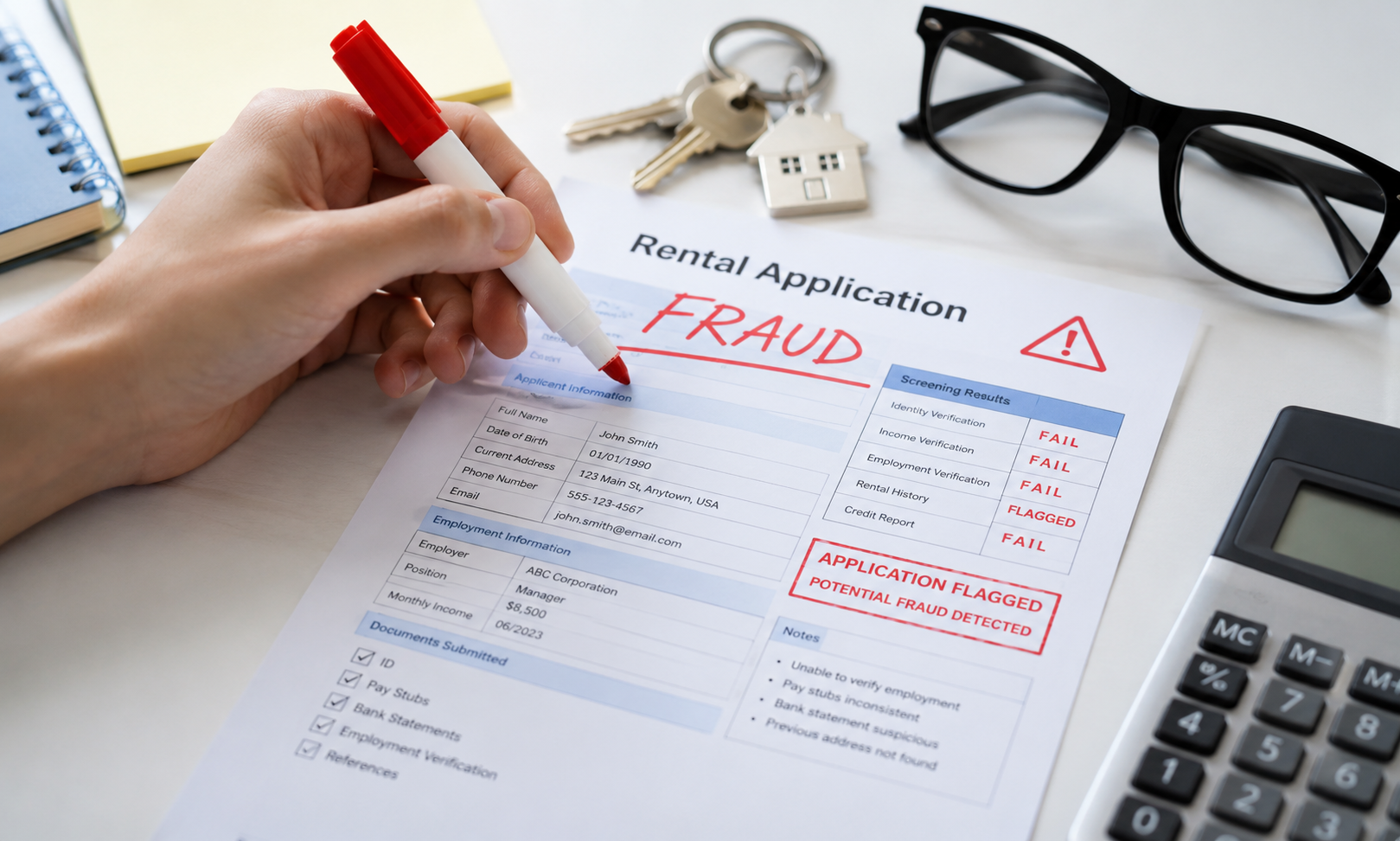
Applicant Screening and Qualification
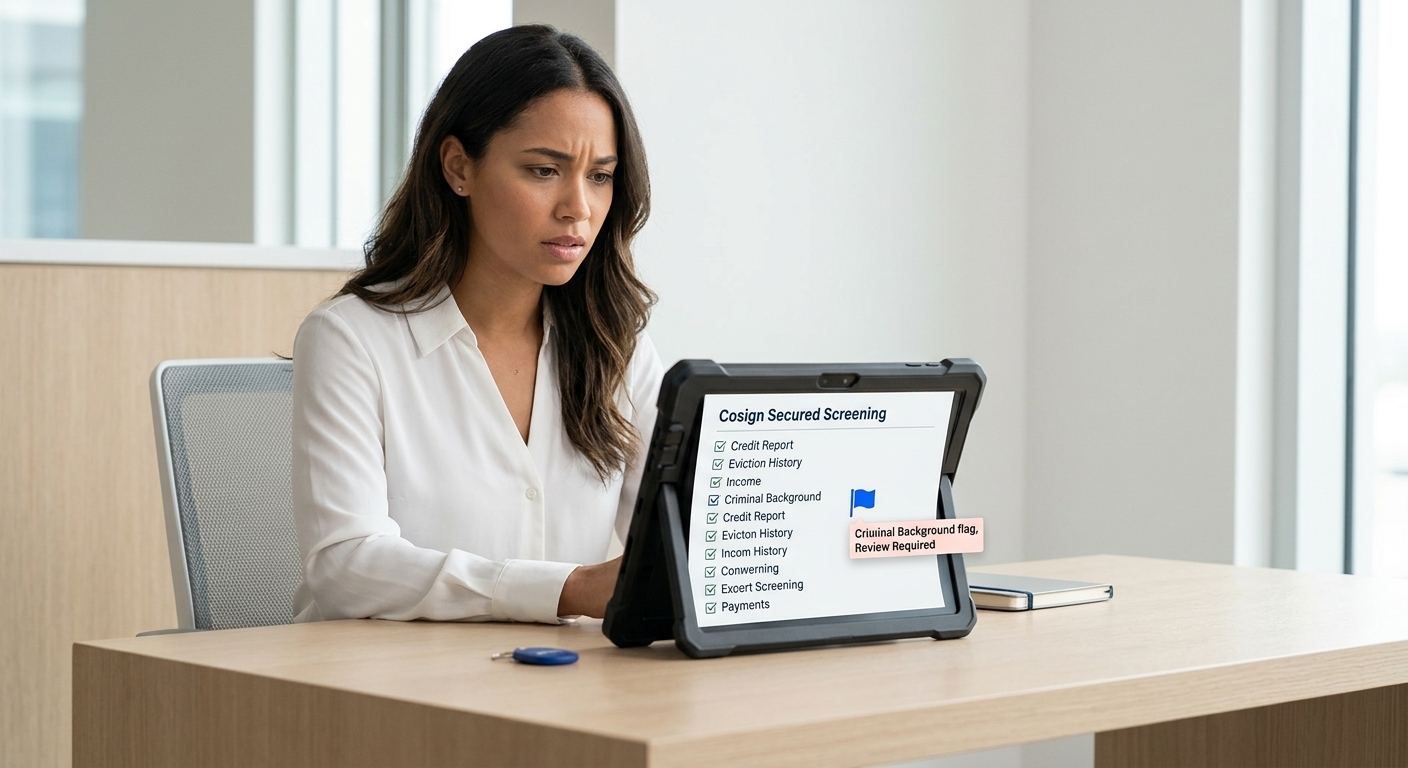
Speed of occupancy matters less if the resident mix creates bad debt, premature turnover, or reputation damage. Screening is a lease-up quality lever: the right residents generate the reviews, referrals, and renewals that reduce future marketing spend and protect NOI over the life of the asset. Fill units fast, but fill them well.
Go-to-Market: Launching the Lease-Up
Pre-construction groundwork and pre-leasing preparation set the conditions for a strong opening.
The launch phase, covering the 30 days before and the first 90 days after doors open, is where those conditions are activated. Sequencing and staffing decisions made here determine whether the property opens with momentum or spends the first quarter recovering from a slow start.
Staff for Peak Demand, Not Steady-State
A lease-up requires two to three times the leasing staff of a stabilized property. A 200-unit property at steady-state may run well with one leasing agent. During lease-up, the same property needs three to four agents handling tours, applications, follow-up, and move-in coordination simultaneously.
Under-staffing the critical first 90 days is the most common and most expensive mistake operators make during this phase.
Online application systems, digital lease signing, and streamlined workflows serve as force multipliers that help leaner teams process more leases without adding friction for prospects. Fully digital processes also reduce errors, improve tracking, and shorten the time from application to move-in.
Activate the Marketing Stack and Re-Engage the Waitlist
One month before leasing starts, the community website should be fully live and search engine optimized, tour booking should work without friction, and email campaigns should activate to re-engage everyone on the pre-construction interest list. Paid social and display budgets should increase at this stage with a clear conversion goal: scheduled tours, not impressions.
The waitlist built during pre-construction is the highest-converting audience at launch. These are renters who already raised their hand. Reaching them first with a clear offer and a frictionless next step, before they cycle back into comparison shopping, is the fastest path to early leases.
Sequence Unit Releases to Maintain Momentum
Releasing too many units at once can overwhelm the leasing team and create a backlog of vacant, unleased inventory that inflates carrying costs before the property has built any leasing rhythm.
Coordinate with construction on phased unit delivery where possible, prioritizing the unit types with the fastest projected absorption, typically studios and one-bedrooms, to generate early occupancy and word-of-mouth before moving into harder-to-lease floorplans.
Early occupancy also matters for reputation. The first residents shape the property's initial online review profile, which directly feeds the Exploration stage for every subsequent prospect.
Getting the right residents in early, and giving them a strong move-in experience, is a marketing decision as much as an operational one.
Deploy Concessions With a Clear Taper Plan
Front-loading concessions at launch builds early occupancy and generates referral traffic that reduces cost per lease as the lease-up progresses.
The goal is not to discount indefinitely but to create momentum in the first 30 to 60 days that compounds through word-of-mouth. Taper concessions as occupancy builds to protect rent roll integrity and avoid setting a pricing floor that follows the property into stabilization.
Flexible lease terms, including short-term and month-to-month options, expand the qualified applicant pool at launch without compromising screening quality. An increasingly diverse renter population includes temporary workers, new graduates, and relocating professionals who may not be ready to commit to a standard 12-month lease.
Offering flexibility at launch reaches these renters and avoids leaving units vacant while waiting for a full-term commitment.
Accelerating and Sustaining Lease-Up Velocity
Velocity is the operational dashboard that tells operators whether every prior phase is working. It is the single most important metric for forecasting when a property will reach stabilization and begin generating positive cash flow, and it is the number that should drive weekly tactical decisions from launch through stabilization.
Velocity Benchmarks by Property Class
In balanced markets, Class A properties should target 20 to 30 units per month per 100 total units, reaching 90% occupancy in three to five months.
Class B properties typically target 15 to 25 units per month per 100 units, with a four-to-six-month stabilization window.
Class C repositioned assets generally see 10 to 20 units per month per 100 units, with a five-to-nine-month range.
These benchmarks assume a balanced market. In submarkets where new supply represents 5% or more of existing inventory delivering simultaneously, operators should expect velocities 20 to 40% below these ranges. Always benchmark against comparable deliveries in the same submarket, not national averages.
Hitting velocity targets on schedule also has a financing implication: construction loan conversion typically requires 85 to 90% occupancy within 12 to 18 months, and each month of delay extends exposure to construction-rate debt.
Velocity Gap Analysis and Intervention Triggers
Weekly velocity tracking is the standard, not monthly. By the time a monthly report shows the lease-up is behind, four weeks of corrective action have already been lost. The critical warning signs:
- falling 30% or more below projected pace by months three to four
- declining weekly application volume while available units remain constant
- tour-to-application conversion below 25%
- physical occupancy plateauing below 70%.
When velocity falls behind, the cost-benefit math almost always favors aggressive early intervention over waiting.
For a typical 200-unit Class A property, monthly carrying costs during lease-up, including debt service, taxes, insurance, and utilities, can exceed $130,000 per month. Offering six weeks free rent on 50 remaining units costs approximately $135,000 in concessions.
If that concession boost accelerates stabilization by two months, it avoids roughly $260,000 in additional carry: a net benefit of $125,000. The math almost always favors acting early.
Retaining Residents After Stabilization
Community Building and Resident Experience
Retention begins on day one of the lease-up, not at the renewal window.
Responsive communication, resident events, well-designed shared spaces, and smart amenities including connected locks and fast Wi-Fi build the kind of loyalty that translates into renewals, positive reviews, and referrals. Each of those outcomes reduces future marketing spend and feeds back into the leasing funnel for the next generation of residents.
The NOI case for retention is direct. Turning over a unit carries hard costs: make-ready expenses, a vacancy loss period, and re-leasing spend. Proactive retention eliminates most of those costs.
In a 2026 operating environment where expenses remain elevated, every renewal signed at or near market rate is a meaningful NOI protection event.
[Link placeholder: Internal link to Cosign retention strategies article]
Early Renewal Outreach and Resident Loyalty Programs
Starting renewal conversations at the 60-day notice window is the industry default. In 2026, that standard is too late.
Properties that begin renewal outreach earlier in the lease cycle, combined with resident loyalty programs and personalized touchpoints, retain more residents before they enter the comparison shopping phase that inevitably follows a notice-to-vacate decision.
Lease-up properties with strong first-year renewal rates enter stabilization in a materially better NOI position than those that must re-lease at market. Lower turnover means lower bad debt exposure, more predictable cash flow, and a stronger debt service coverage ratio heading into any refinancing conversation.
Building a Lease-Up That Hits Its Timeline
A successful lease-up strategy for multifamily properties in 2026 moves through six phases working in parallel:
- a marketing framework calibrated to how renters decide
- pre-construction digital groundwork
- pre-leasing preparation, a structured go-to-market launch
- weekly velocity management
- proactive retention through stabilization.
Operators who treat these as sequential steps rather than concurrent disciplines tend to be the ones playing catch-up at month four.
The common thread across every phase is data discipline: submarket-specific pricing, weekly velocity tracking, attribution-linked marketing spend, and accurate listing information across every channel. The properties that stabilize on schedule are not necessarily those with the biggest marketing budgets; they are the ones with the tightest operational feedback loops.
For operators seeking to expand their qualified applicant pool without compromising screening standards, Cosign offers a rent guarantor solution that helps borderline-qualified renters get approved, protecting both lease-up velocity and long-term resident quality.
.avif)
.avif)
.png)
.png)


Let’s boost your occupancy rates


