


.svg)


NMHC Pulse Survey: 93% of Landlords Report Rental Fraud. Here’s What the Data Means for Your Screening Stack
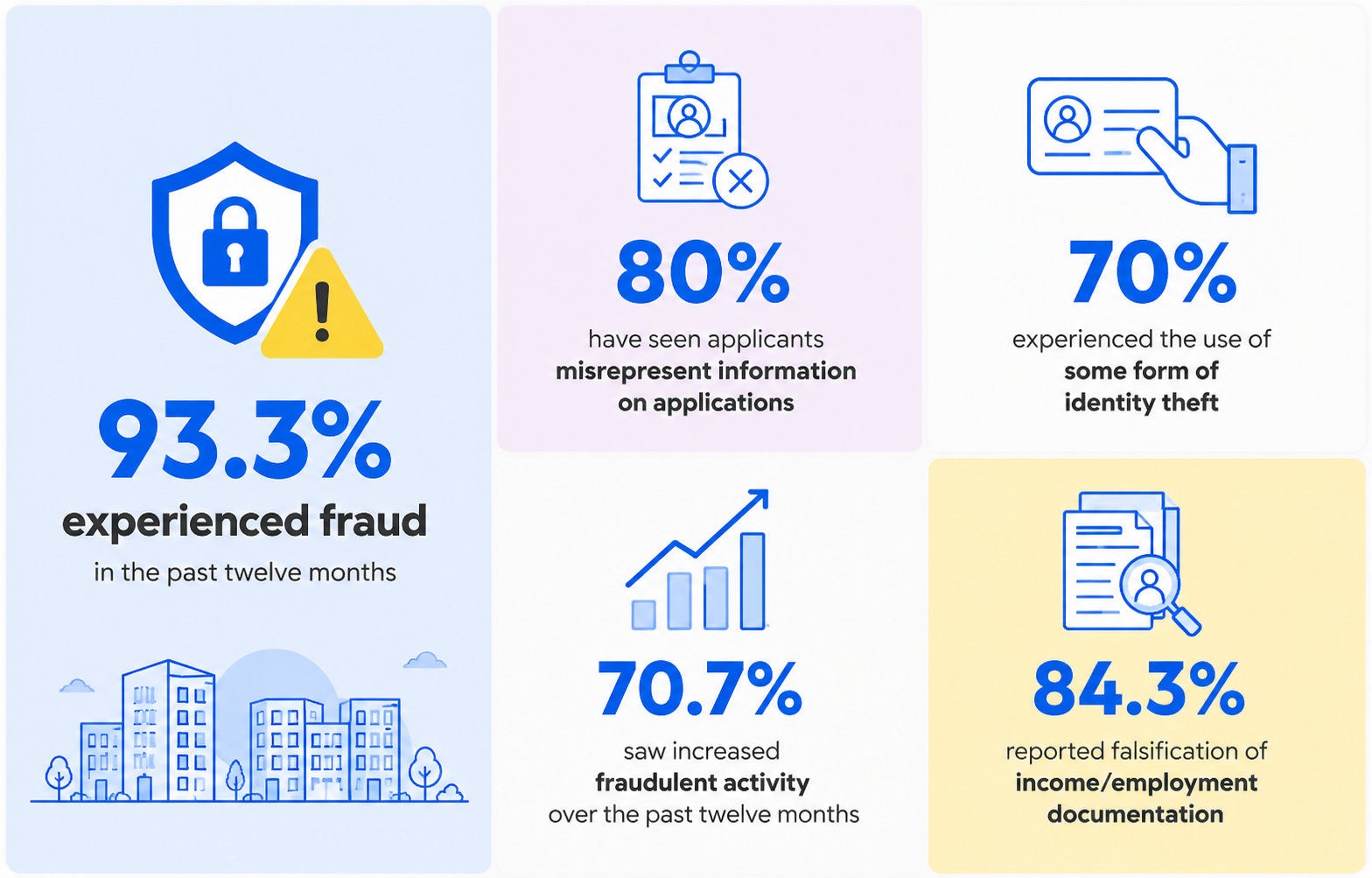
- 93.3% of rental housing providers reported experiencing fraud in the past 12 months, per NMHC's Pulse Survey.
- 84% of property managers say fraud has increased over the past 24 months.
- On average, 23.8% of eviction filings among survey respondents were tied to fraudulent applications.
- A single eviction in a market like New York City can cost $7,000-$15,000 once legal fees, marshal costs, lost rent, and unit turn are included.
- The survey data points to a screening stack problem, not a one-time enforcement problem: fraud is now a baseline condition operators need to plan around.
- A guarantor layer, like Cosign, limits the financial fallout even when fraudulent applications get through screening.
The Survey Number That Should Change How You Screen
When 93.3% of rental housing providers report experiencing fraud in the past 12 months, fraud has stopped being an edge case and become an operating assumption. That is the headline figure from the National Multifamily Housing Council's Pulse Survey, and it reframes how screening budgets and staffing decisions should be made across the industry.
The trend line is just as important as the snapshot. 84% of property managers report that rental fraud has increased over the last 24 months, which means this is not a one-time spike tied to a single bad actor or a temporary gap in a specific screening tool. It is a sustained, worsening trend that requires a sustained response, not a one-off fix.
Fraud Is Now a Measurable Driver of Eviction Costs
The financial consequences of this trend show up downstream in ways that are easy to underestimate at the application stage. Survey respondents reported that, on average, 23.8% of their eviction filings were directly tied to fraudulent applications and the subsequent failure to pay rent. That is nearly a quarter of all eviction activity traced back to a decision made months earlier at the leasing desk.
The dollar impact compounds from there. A single eviction in a market like New York City can cost $7,000 to $15,000 once legal fees, marshal costs, lost rent, and unit turn costs are added together. Multiply that across a portfolio experiencing fraud at anywhere near the 93.3% prevalence rate, and it becomes clear why the average annual bad debt figure for large operators sits at $4.2 million.
.png)
Why This Is a Screening Stack Problem, Not a One-Time Fix
It is tempting to treat a bad fraud year as something to solve with a single new tool or a stricter manual review policy. The survey data argues against that framing. Fraud has been climbing for 84% of operators over two full years, which means whatever screening stack was adequate in 2023 or 2024 is very likely inadequate now. Fraud tactics evolve faster than most screening contracts get renewed, and operators locked into a static, once-a-year-reviewed process are the ones most exposed.
Multifamily Insiders' analysis of how much fraud actually slips through current screening tools reinforces this point: even operators who believe their screening is thorough are likely underestimating how much fraud is getting through undetected, precisely because most fraud is not discovered until well after move-in.
Building a Stack That Assumes Fraud Will Get Through
Given how consistently fraud is slipping past detection industry-wide, the most realistic strategy is not chasing a 100% detection rate. It is building a stack with a financial backstop for the fraud that inevitably gets through. This is the core value a lease guarantor adds that pure detection tools cannot: Cosign underwrites the renter directly, and if a fraudulent or otherwise defaulting resident does slip through, Cosign pays the claim within 5 business days of approval, within a 60-day filing window after vacancy. That converts an open-ended loss, the kind reflected in that $4.2 million average bad debt figure, into a capped, predictable cost.
This does not replace the need for strong upfront screening. It changes what upfront screening needs to accomplish. Instead of needing to catch every single fraudulent application, which the 93.3% prevalence rate suggests is not realistically achievable, screening plus a guarantor layer only needs to catch enough to keep claims and premiums reasonable, while the guarantor absorbs the tail risk that gets through. For a deeper look at how these red flags typically show up during the application process, see Cosign's guide to rental fraud red flags and lease coverage.
Translating the Survey Into an Action Plan
Operators reviewing their screening stack after this data should focus on three things: confirming their current screening tools have been updated in the last 12 months to reflect current fraud tactics, tracking what percentage of their own evictions trace back to application fraud specifically, and evaluating whether a guarantor layer would meaningfully reduce the financial exposure from the fraud that inevitably gets through. The NMHC data makes clear that doing nothing differently in 2026 than in 2024 is not a neutral choice. It is a bet that fraud rates will not keep climbing, and the last two years of data do not support that bet.
See how it works for yourself, book a demo today at rentwithcosign.com.
Frequently Asked Questions
Q: What percentage of landlords experienced rental fraud in the past year?
A: According to NMHC's Pulse Survey, 93.3% of rental housing providers reported experiencing fraud in the past 12 months.
Q: How much of eviction activity is tied to application fraud?
A: Survey respondents reported that, on average, 23.8% of their eviction filings were directly tied to fraudulent applications and the subsequent failure to pay rent.
Q: How much does a fraud-related eviction typically cost?
A: In a market like New York City, a single eviction can cost $7,000 to $15,000 once legal fees, marshal costs, lost rent, and unit turn costs are factored in.
Q: Is rental fraud getting better or worse over time?
A: It is getting worse. 84% of property managers report that rental fraud has increased over the last 24 months, indicating a sustained upward trend rather than a temporary spike.
Q: How does Cosign help operators manage the financial impact of fraud that isn't caught during screening?
A: Cosign acts as a lease guarantor and pays valid claims within 5 business days of approval, within a 60-day filing window after vacancy. This caps the financial exposure from fraud that slips past initial screening, converting an open-ended loss into a predictable, limited cost.
.avif)
.avif)
.png)

.png)



Aumentemos tus tasas de ocupación


