


.svg)


Student Housing Pre-Leasing Went From Decade Low to Late Sprint: What Fall 2026 Is Teaching Operators
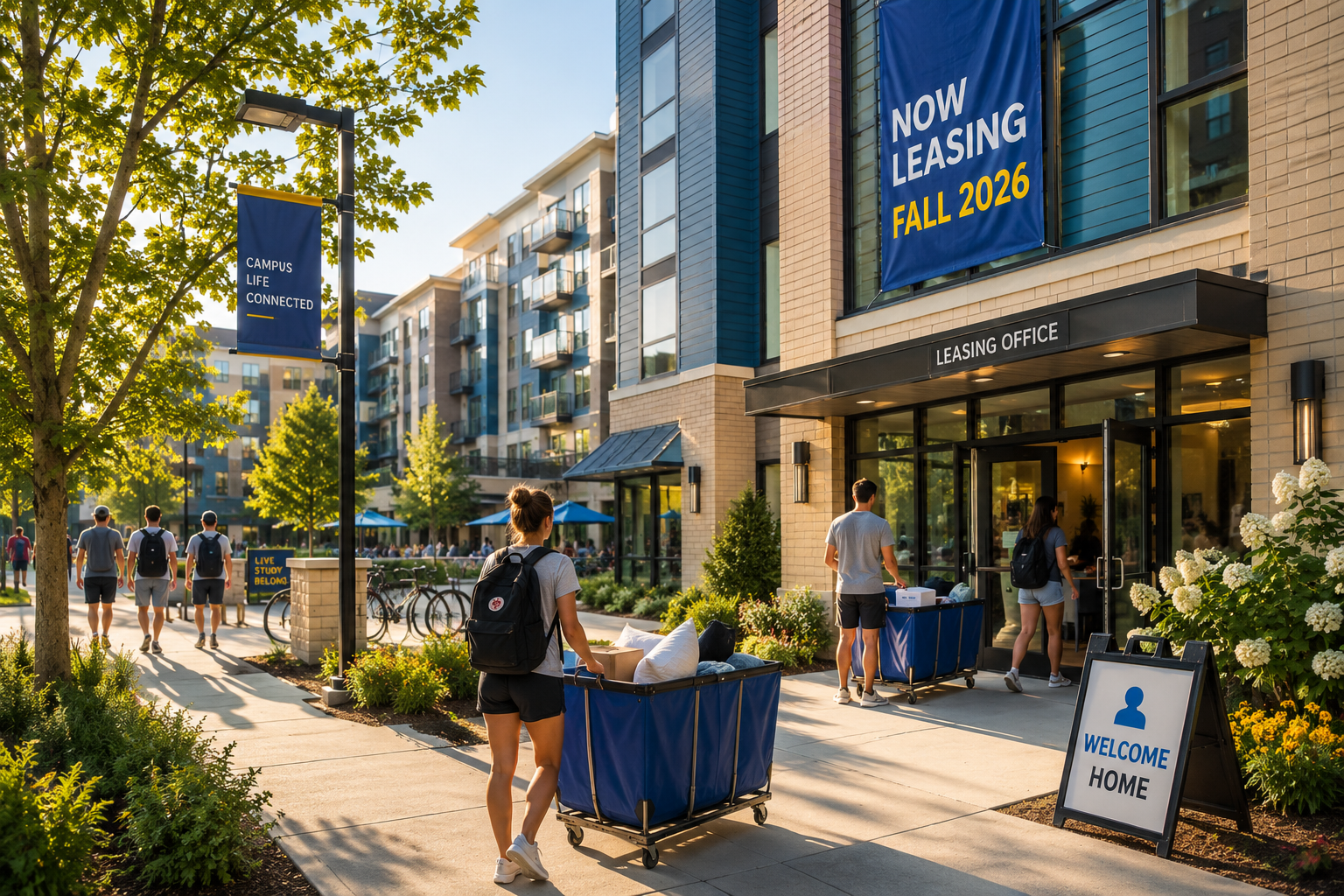
- Fall 2026 pre-leasing opened at a decade-low 3.3% of beds in October, jumped to 17.3% by November, and reached 68.2% by April, a late and compressed cycle.
- Roughly 30,000 new beds are delivering across 37 campuses for Fall 2026, up from 26,000 in 2025, adding supply pressure to an already volatile year.
- Enrollment uncertainty among international students is complicating demand forecasts in many university markets.
- A compressed leasing window rewards operators who can approve first-time renters and international students quickly instead of losing weeks to guarantor paperwork.
- Institutional guarantee coverage removes the two biggest approval bottlenecks in student housing: no credit history and no US-based guarantor.
The Fall 2026 student housing cycle is ending in a sprint that few operators would have predicted in October. Pre-leasing opened at a decade-low 3.3% of beds, the slowest start in ten years, before rebounding sharply to 17.3% by November and climbing to 68.2% of beds pre-leased by April.
What does that trajectory mean for operators? Two things. First, the demand didn't disappear; it moved later, compressing a nine-month leasing season into a shorter, more intense window. Second, with roughly 30,000 new beds delivering across 37 campuses this fall, up from 26,000 last year, the properties that win the late window are the ones that can convert applications fastest.
For the July-August crunch now underway, that makes approval speed the competitive variable. Here is what the data says, and how the operational playbook is changing.
A Late Cycle, Not a Weak One
The October start rattled the sector. Pre-leasing was sluggish across every distance tier, with close-to-campus and far-out properties alike reporting barely 3% occupancy commitments. But the November rebound and the steady climb through spring, tracked in Capright's student housing market update, tell a different story: students and parents delayed decisions rather than abandoning them.
Several forces pushed the timeline back. Families watching tuition costs shopped longer. New deliveries gave renters more options to compare. And enrollment uncertainty, particularly around international students, left many operators cautious about early-season pricing, with universities anticipating potential enrollment declines among international students adding a layer of demand-forecast difficulty in the markets that depend on them most.
.png)
The Supply Layer Underneath
The 30,000 beds delivering this fall land unevenly. Flagship-adjacent markets with enrollment growth will absorb their deliveries; smaller university markets with flat enrollment will feel every new bed. That divergence echoes the conventional multifamily pattern we covered in our 2026 lease-up and NOI pressure market pulse: supply tells you which markets get competitive, demand timing tells you when.
For operators in delivery-heavy markets, the late cycle plus new supply means the final six weeks before move-in decide the year. Every application that stalls in processing is a bed a competitor fills.
The Approval Bottleneck Is the Fixable One
Student housing's applicant pool is structurally hard to screen. First-time renters have no rental history and thin or nonexistent credit. International students often have neither a US credit file nor an SSN. The traditional fix, a parental guarantor earning 80x monthly rent with strong US credit, excludes exactly the demographics driving enrollment growth, and chasing guaranty paperwork across time zones burns weeks the compressed cycle no longer allows.
This is the bottleneck Cosign was built to remove. Students apply with a soft credit check that doesn't require an established file, ITINs are accepted alongside SSNs for international applicants, and roughly 90% of applicants are approved (company-stated). Lease terms from 3 to 24 months map cleanly onto academic calendars. The property pays nothing and receives institutional guarantee coverage of 3x to 12x monthly rent on every backed bed, with claims paid within five business days.
Operators using Cosign in university markets convert the two hardest applicant types, no-credit and no-US-guarantor, in about 24 hours instead of weeks. In a cycle where two-thirds of beds leased after November, that speed is the difference between a full fall and a leftover list. Properties competing for the late-deciding student should treat approval velocity as seriously as pricing.
The Fall 2027 cycle opens in a few months, and if this year is a guide, it will be late, compressed, and competitive again. Build the approval capacity before the window opens. See how it works for student housing. Book a demo at rentwithcosign.com.
Frequently Asked Questions
Q: How is student housing pre-leasing performing for Fall 2026?
A: After a decade-low start of 3.3% of beds pre-leased in October, the cycle rebounded to 17.3% by November and 68.2% by April. Demand shifted later rather than shrinking, compressing the leasing season into a shorter window.
Q: How much new student housing supply is delivering in 2026?
A: Approximately 30,000 beds across 37 campus markets are expected to deliver for Fall 2026, up from about 26,000 beds in 2025. Absorption will vary widely by market depending on enrollment trends.
Q: How can international students rent apartments without US credit or an SSN?
A: Third-party guarantor services solve this directly. Cosign accepts ITINs in addition to SSNs, uses a soft credit check that doesn't require an established US file, and backs approved students with an institutional lease guarantee, removing the need for a US-based personal guarantor.
Q: Why do student housing operators use lease guarantee programs?
A: Because the core applicant pool, first-time renters and international students, is structurally hard to screen with traditional tools. Guarantee coverage lets operators approve these applicants quickly while protecting the property with 3x to 12x monthly rent in coverage, at no cost to the operator.
Q: What should operators change for the Fall 2027 pre-lease cycle?
A: Plan for a late, compressed cycle: hold pricing discipline early, and invest in approval speed for thin-file applicants so the property can convert the late-deciding majority faster than competing deliveries.
.avif)
.avif)




Aumentemos tus tasas de ocupación


