


.svg)


Application Fraud Peaks in Leasing Season. Here's How to Tighten Screening Without Slowing Approvals.
TL;DR
- Application fraud concentrates in peak leasing season, when volume gives fraudulent files their best odds of slipping through a busy screen.
- 93.3% of apartment operators report dealing with application fraud, and roughly 1 in 8 rental applications contains fraudulent income documentation.
- AI-generated documents rose 500% between April and December 2025, and they are now realistic enough to pass visual review.
- Slowing down approvals to fight fraud costs leases in the exact weeks that set your fall occupancy.
- The answer is layering: document forensics, bank-linked verification, and lease guarantee coverage that removes the loss even when a sophisticated fake gets through.
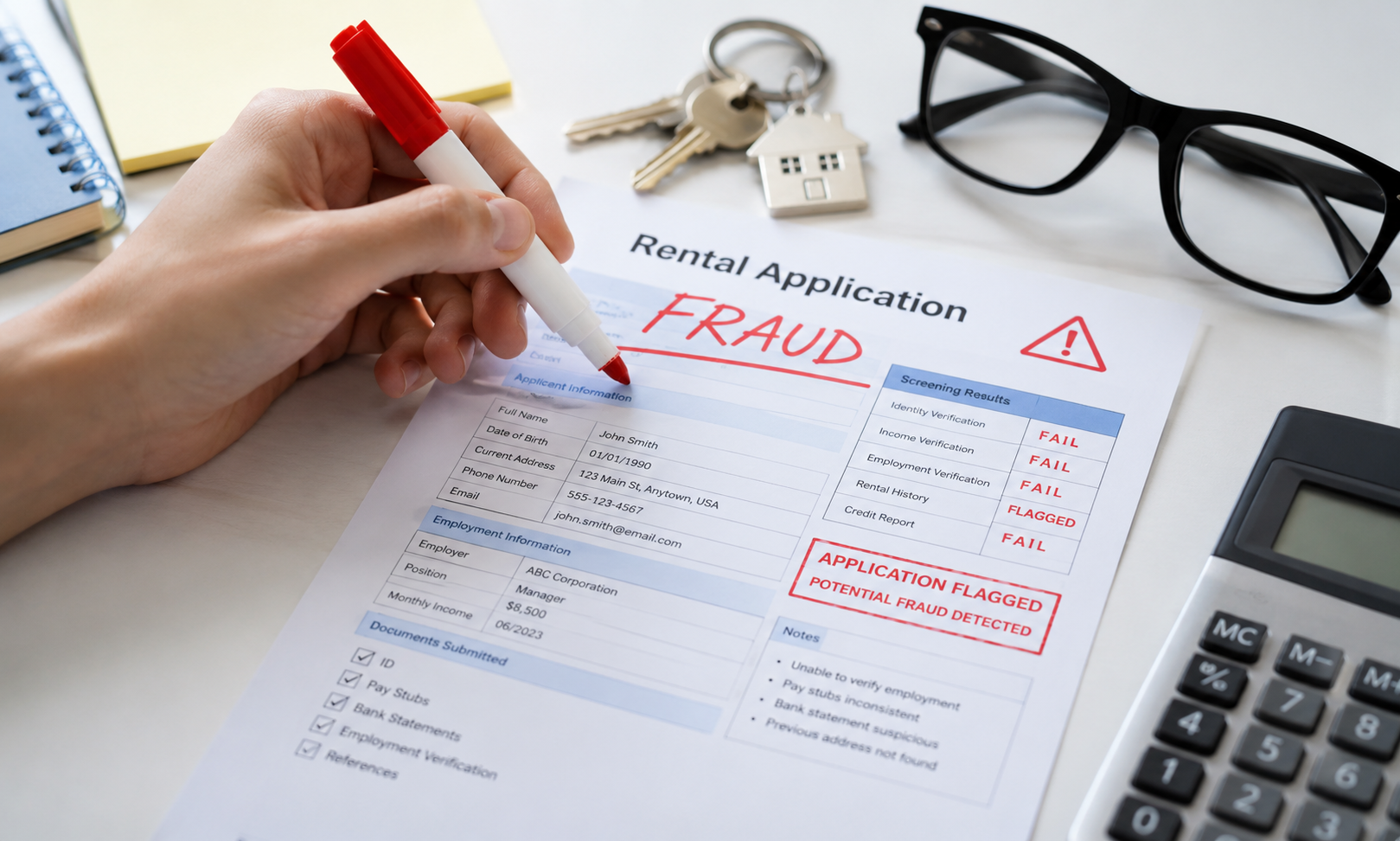
Why does application fraud spike in summer? Because fraud follows volume. Peak leasing season means more applications per agent, faster decisions, and more pressure to hit move-in dates, and that combination is exactly what a fraudulent file needs. As Resman puts it, application fraud has a season, and it's called leasing season.
The baseline numbers were already demanding attention. 93.3% of apartment operators report dealing with application fraud, and analysis of more than 14 million rental documents found that roughly 1 in 8 applications contains fraudulent income documentation. Industry-wide, rental fraud costs US landlords an estimated $4.7 billion annually.
So the practical question for July and August is not whether to tighten screening but how to tighten it without adding a single day to approval timelines. Operators who solve for both, speed and scrutiny, win the season. Here is the playbook.
Why Peak Volume Is Peak Exposure
A leasing agent reviewing eight applications a day in February can look closely at each one. The same agent reviewing twenty-five a day in July cannot, and applicants with fabricated documents know it. Fraudulent applications cluster where review capacity is thinnest, which is why the files that would get caught in the slow season sail through in the busy one.
The documents themselves have also improved. AI-generated pay stubs and bank statements increased 500% between April and December 2025, and the current generation is formatted correctly, internally consistent, and visually indistinguishable from the real thing. We covered the detection specifics in AI-forged documents are now standard practice, and the short version is that human eyes are no longer a control.
.png)
The Cost of Getting It Wrong, and of Being Slow
A fraudulent approval is expensive. MeasureOne's analysis of application fraud shows the losses run well beyond missed rent into turn costs, staff time, and collections that rarely recover anything. Our own breakdown of what a bad screen actually costs puts the all-in figure for a single bad approval in the five figures.
But over-correcting is expensive too. Every extra day of review in peak season is a day for the applicant to sign somewhere else. Manual verification steps that add 48 hours to an approval can quietly cost more leases than fraud would have. The constraint is real: tighten the screen and hold approval times flat.
A Three-Layer Defense That Doesn't Add Friction
The first layer is automated document forensics. Metadata analysis, font and kerning checks, and template matching catch the majority of altered PDFs in seconds rather than hours, and they scale with volume in a way human review cannot.
The second layer is source verification. Bank-linked income verification pulls deposit data directly from the applicant's institution, which sidesteps the forged-document problem entirely. Pair it with the rental history checks described in our step-by-step verification guide for landlords.
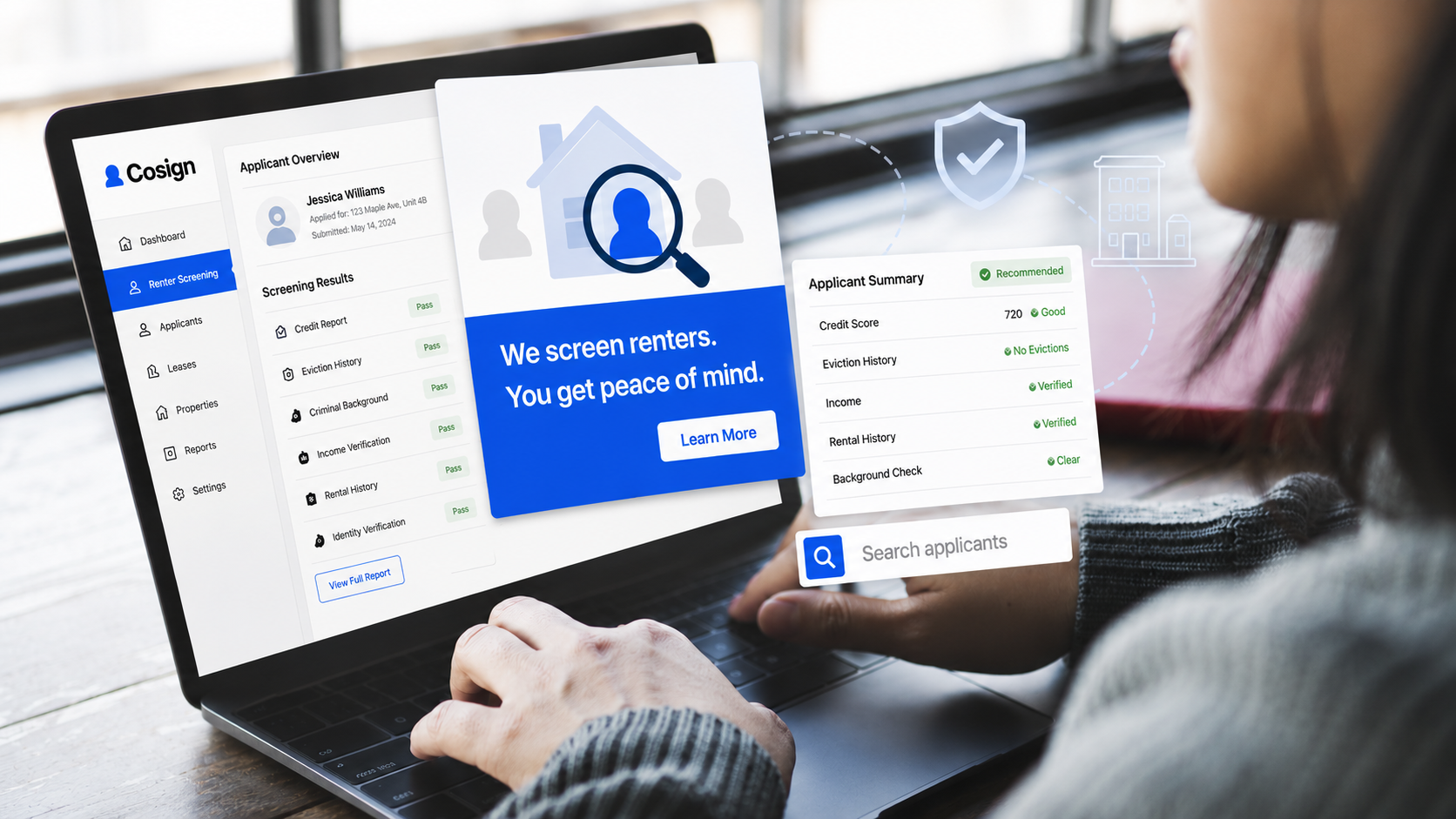
The third layer is financial backstop, because no detection stack catches everything. This is where Cosign fits. Every Cosign-backed lease carries institutional guarantee coverage of 3x to 12x monthly rent, so if a sophisticated fake does get through, the property's rent is protected and claims are paid within five business days. Cosign's own screening runs on a soft credit check and verified identity, which adds a second set of eyes to every backed applicant without adding a second timeline. Approvals typically move in about 24 hours, which means the protection layer is also the fast layer.
Layered this way, screening gets stricter while approvals get faster: forensics handles the documents, source data handles the income, and the guarantee handles the residual risk that no tool can zero out.
Peak season is when screening earns its keep. Get a look at how guarantee-backed approvals hold up under summer volume. Book a demo at rentwithcosign.com.
Frequently Asked Questions
Q: When is rental application fraud most common?
A: During peak leasing season, roughly May through September, when application volume is highest and review capacity per file is lowest. Fraudulent files are submitted year-round, but their success rate rises sharply when leasing teams are processing the most applications.
Q: How common is rental application fraud in 2026?
A: Very. 93.3% of apartment operators report experiencing application fraud, and document-level analysis finds roughly 1 in 8 applications contains fraudulent income documentation. AI-generated documents rose 500% between April and December 2025.
Q: How can landlords detect fake pay stubs?
A: Visual review is no longer reliable. Automated document forensics that check metadata, formatting, and template signatures catch most alterations, and bank-linked income verification avoids the document entirely by pulling deposit data straight from the applicant's bank.
Q: Does Cosign protect against application fraud?
A: Cosign adds two layers. Its own approval process verifies identity and income through a soft credit check, and every backed lease carries guarantee coverage of 3x to 12x monthly rent, so the property is financially protected even if a fraudulent application slips past every screen. Claims are paid within five business days.
Q: Will tighter screening slow down my approvals in peak season?
A: Not if the added layers are automated. Document forensics and bank-linked verification run in minutes, and guarantee-backed applicants typically clear in about 24 hours, so operators can raise scrutiny and keep approval timelines flat at the same time.
.avif)
.avif)
.png)
.png)



Aumentemos tus tasas de ocupación


