


.svg)


Best Lease Guarantor Companies in 2026: Renters Guide

Finding an apartment in 2026 is harder than it looks. AI-driven screening tools, higher income multipliers, and strict credit thresholds are pushing otherwise qualified renters out of the market.
That is where lease guarantor companies come in.
A lease guarantor company acts like a corporate co-signer on demand. Instead of asking a family member to back your lease, you pay a third party to guarantee the rent when you cannot qualify on your own.
This guide compares the best lease guarantor companies in 2026, how they work, what they cost, and who they are best for, so renters can bypass rejection and landlords can secure more predictable rental income.
What Are the Best Lease Guarantor Companies and How Do They Work?
The role of a corporate guarantor vs. a traditional cosigner
A traditional cosigner is usually a parent, relative, or close contact who signs the lease alongside the tenant. They must meet income and credit requirements and are personally liable if rent is missed.
A lease guarantor company replaces that individual with an institutional backer. These companies have liquid assets or insurance backing that satisfies landlord proof-of-funds requirements immediately. From the landlord’s perspective, the risk is transferred to a professional guarantor. From the renter’s perspective, access to housing improves without relying on family support.
Who needs lease guarantor services?
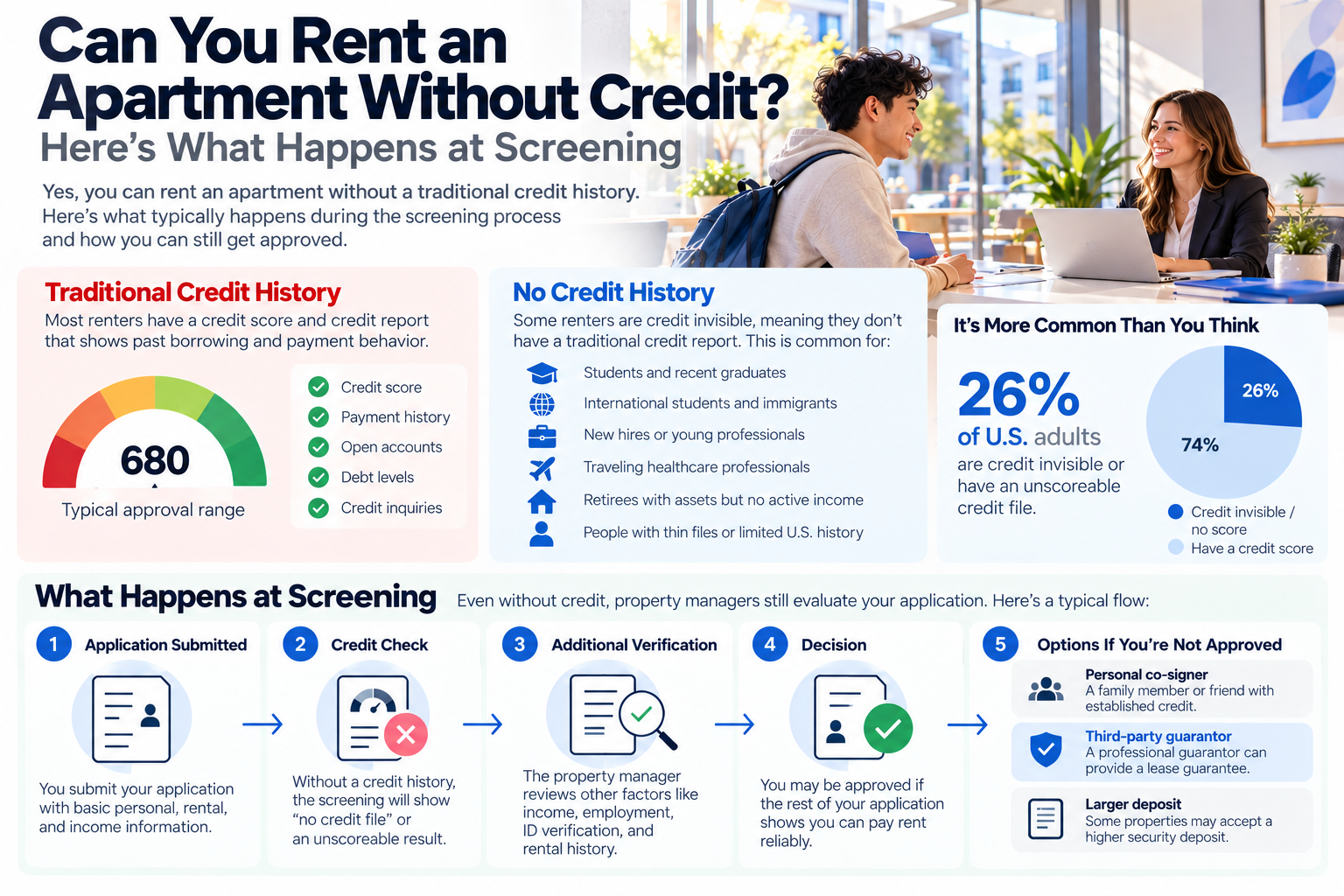
Lease guarantor services are most commonly used by renters who can afford rent but do not fit rigid screening formulas, including:
- International students and expats without US credit history
- Freelancers and gig workers with variable or lumpy income
- Retirees with strong assets but low monthly income
- First-time renters with thin credit files
- Renters applying to high-demand or luxury buildings
Surety bonds vs. rent guarantee insurance
Not all guarantor products work the same way.
Some services operate as surety bonds, which function more like a credit backstop than insurance. If the guarantor steps in to cover missed rent, that obligation ultimately flows back to the tenant as a recoverable debt.
Other products are structured closer to rent guarantee insurance, where the financial risk sits with an insurer or the property owner rather than being passed back to the renter. These products are typically landlord-paid and used for portfolio-level risk mitigation rather than renter qualification.
Understanding which model you are using matters, especially if a lease ever goes into default. (link section to dedicated blog on Rent Guarantee Insurance)
Top 8 Best Lease Guarantor Companies of 2026 Reviewed

1. Cosign – Overall Best for Renters and Multifamily Landlords
Cosign is a third-party lease guarantor built by owners and operators to solve approval gaps without compromising asset performance.
Unlike most guarantor products that focus only on renter qualification or only on landlord protection, Cosign is designed to do both. It helps renters who fall just outside traditional screening criteria qualify for apartments, while also protecting landlords against rent default.
Cosign works directly with multifamily properties across the country, from workforce housing to newly delivered Class A communities. The platform separates qualification from protection by using more complete applicant data and pairing approvals with a guarantor structure that backstops delinquency risk.
This approach is especially effective for renters with non-W-2 income, thin credit files, recent life events, or international backgrounds. From the landlord side, Cosign is used to improve conversion rates, reduce vacancy, and maintain fair housing compliance through consistent underwriting.
Pricing varies by property and risk profile, and is typically structured as a tenant-paid guarantor fee when used for qualification.
Are you a landlord or leasing agent? See how Cosign can work for you. Book a Demo now
2. TheGuarantors – Best for Institutional Landlords
TheGuarantors is popular with large property managers and institutional landlords. The company underwrites billions in policies and offers both lease guarantees and security deposit alternatives.
Approval standards vary based on risk profile, and pricing typically ranges from 40 percent to 130 percent of one month’s rent.
This provider is often favored in professionally managed buildings where standardized processes matter.
3. Insurent – Best for NYC and High-End Rentals
Insurent is one of the most widely accepted lease guarantor companies, particularly in competitive urban markets.
Insurent is widely recognized by large owners and management companies, particularly in luxury and high-barrier-to-entry buildings that serve international renters and asset-heavy applicants. Income requirements are typically lower than standard screening, often around 27.5x rent or equivalent assets.
Cost is generally 70 to 90 percent of one month’s rent for US citizens and can reach up to 110 percent for non-citizens.
4. Leap – Best for Students and Gig Workers
Leap focuses on speed and flexible underwriting. Many applicants receive same-day decisions, and the platform operates in all 50 states.
It is frequently used by students, hourly workers, and freelancers whose income may not show cleanly on traditional pay stubs.
Pricing typically starts around 55 percent and can reach 90 percent of one month’s rent.
5. SingleKey – Best for Landlord Risk Protection
SingleKey is primarily landlord-focused. Its rent guarantee product acts as a financial safety net, covering missed rent and certain legal costs for eviction.
Coverage can extend up to 12 months of unpaid rent, depending on the plan.
Pricing is usually around 5 percent of monthly rent and is typically paid by the landlord rather than the tenant.
6. Rhino – Best for Low Move-In Costs
Rhino is best known for security deposit alternatives. Instead of a large upfront deposit, renters pay smaller monthly fees.
While Rhino is not a traditional lease guarantor for qualification, it reduces move-in costs and is often paired with other approval tools. Rhino operates nationwide.
7. Nomad Lease – Best for Guaranteed Rent Payouts
Nomad Lease focuses on simplifying property management while guaranteeing rent payouts to landlords.
The service can cover up to three months of unpaid rent and is structured as a landlord-paid risk product rather than a renter-paid qualification tool.
8. Steady Rent – Best for Property Managers
Steady Rent works exclusively through partnered property managers.
Its Rent Advance product provides six to twelve months of rent upfront, shifting cash flow risk away from landlords. This model is portfolio-oriented and not available directly to individual renters.
Comparing Lease Guarantor Pricing and Coverage Fees
How guarantor pricing actually works for renters
Most tenant-paid lease guarantor services charge a one-time fee based on monthly rent.
In 2026, that fee typically ranges from 70 percent to 110 percent of one month’s rent, depending on credit, income stability, and residency status.
This payment does not reduce rent or future obligations. It is the price of shifting approval risk away from the landlord so the lease can move forward.
Tenant-paid vs. landlord-paid models
Tenant-paid guarantor services are primarily used to qualify for an apartment. These include providers like Cosign, Insurent, Leap, and TheGuarantors.
Landlord-paid products focus on risk mitigation after a tenant is approved. Providers like SingleKey, Nomad, and Steady Rent fall into this category.
Understanding who pays and why helps avoid confusion during the leasing process.
Refunds and non-refundable fees
Application fees are usually non-refundable.
However, the main guarantor premium is often refunded if the lease is not signed or the application is ultimately denied by the landlord. Policies vary by provider, so confirmation before payment matters.
How to Qualify for the Best Lease Guarantor Services

Credit score and income requirements
Most guarantor companies require a minimum credit score, often around 600, though some rely more heavily on income or assets.
Income thresholds are typically lower than standard landlord screening and may range from 25x to 30x monthly rent.
The open banking shortcut for faster approval
Many guarantor companies now support open banking tools that allow applicants to link bank accounts directly.
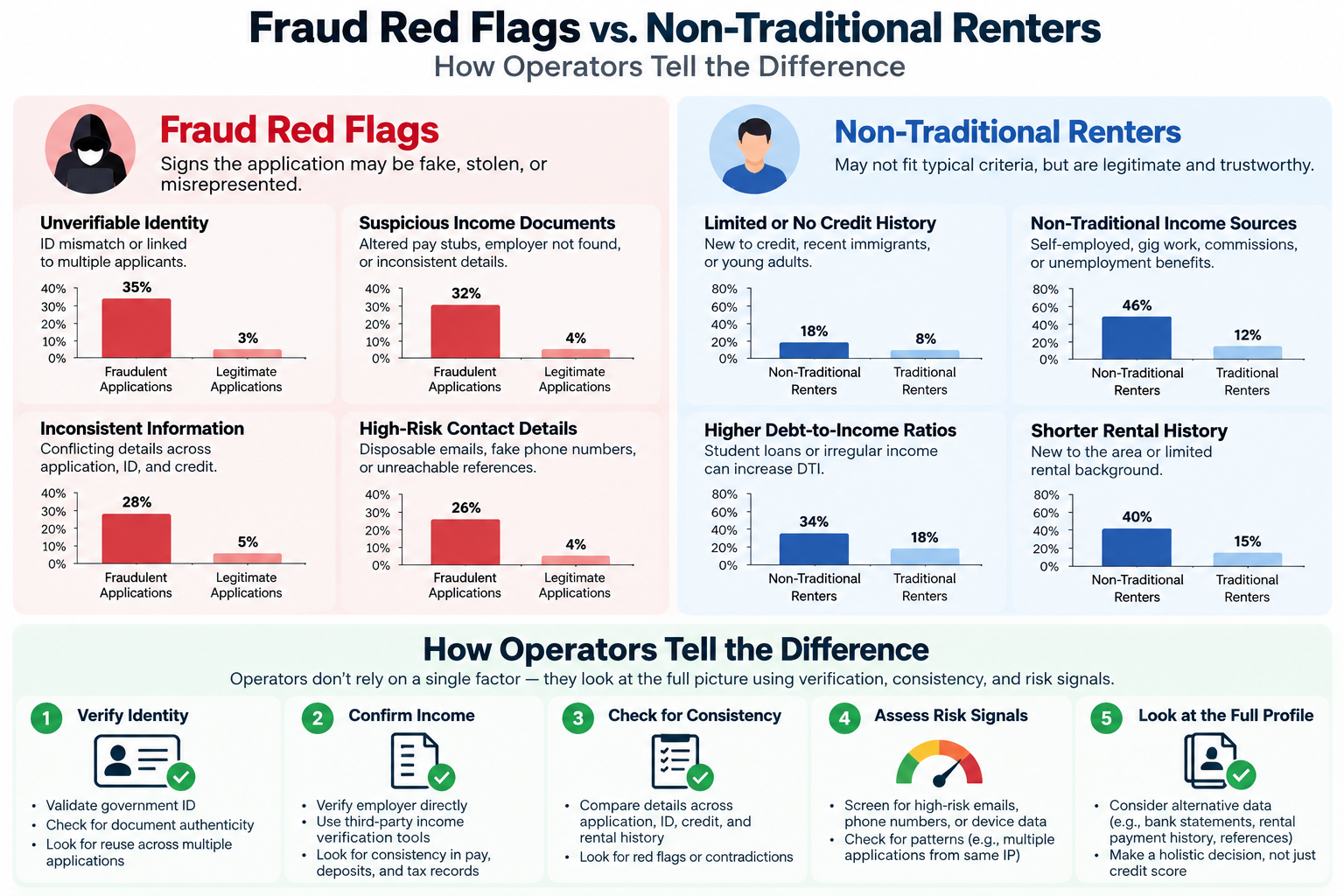
This can speed up approval and reduce fraud flags triggered by edited PDFs or screenshots of bank statements.
Documentation needed
Common documentation requirements include:
- Government-issued ID or passport
- Unaltered bank statements downloaded directly from the bank
- Proof of income or assets
Submitting clean, original documents improves approval odds.
Benefits of Using Lease Guarantor Companies
Benefits for renters
For renters, lease guarantor companies create a path to approval when traditional screening falls short. They help qualified renters secure housing without relying on family co-signers, navigate strict income multipliers, and access competitive or professionally managed buildings that would otherwise be out of reach. For many renters, guarantor services also speed up approvals and provide clearer, more predictable outcomes during the application process.
Benefits for landlords
For landlords and property managers, lease guarantor companies protect rental income while preserving consistent screening standards. By backstopping delinquency risk, these products reduce exposure to rent default, improve conversion rates from the existing applicant pool, and help stabilize occupancy without making subjective exceptions that could create fair housing risk.
Frequently Asked Questions About Lease Guarantor Companies
Is a lease guarantor the same as a co-signer?
No. A co-signer often has rights tied to the lease. A corporate guarantor has financial liability only.
How much does a lease guarantor cost in 2026?
Most tenant-paid services cost between 70 and 110 percent of one month’s rent.
Does using a guarantor affect my credit score?
There may be a credit inquiry. Defaults can result in collections.
Can I use a guarantor with an eviction history?
It is difficult, but some providers will consider applicants if past debts are resolved.
Conclusion
Lease guarantor companies have become a critical bridge in the 2026 rental market. They replace traditional family co-signers and help qualified renters overcome outdated screening models.
Renters should compare providers carefully, understand pricing, and remember that guarantor services are financial products, not free insurance.
If you are exploring approval options or looking to reduce rental risk, it's also a great idea to understand your income to rent ratio before applying for a lease.
.avif)
.avif)
.jpeg)
.jpeg)



Aumentemos tus tasas de ocupación


